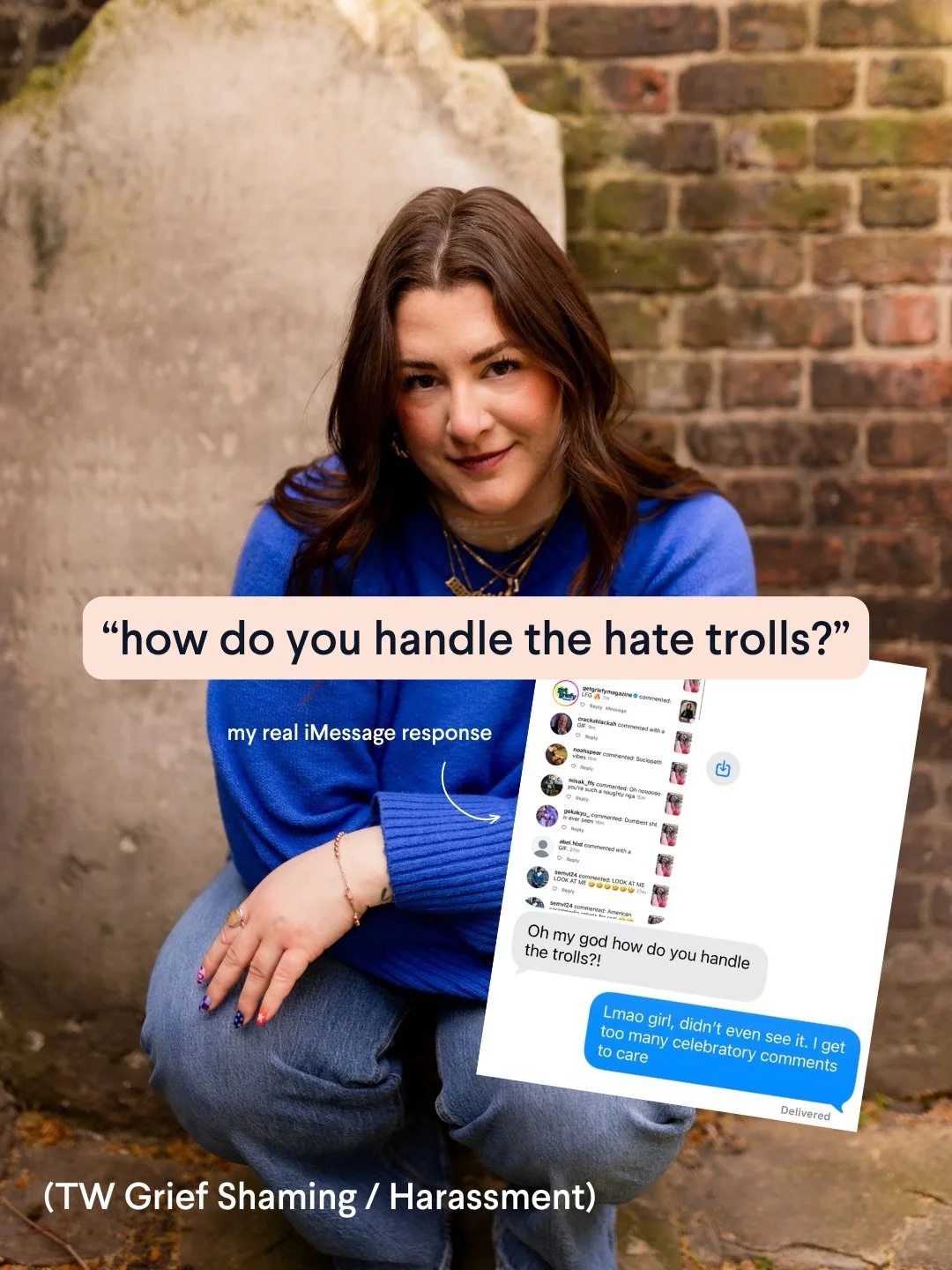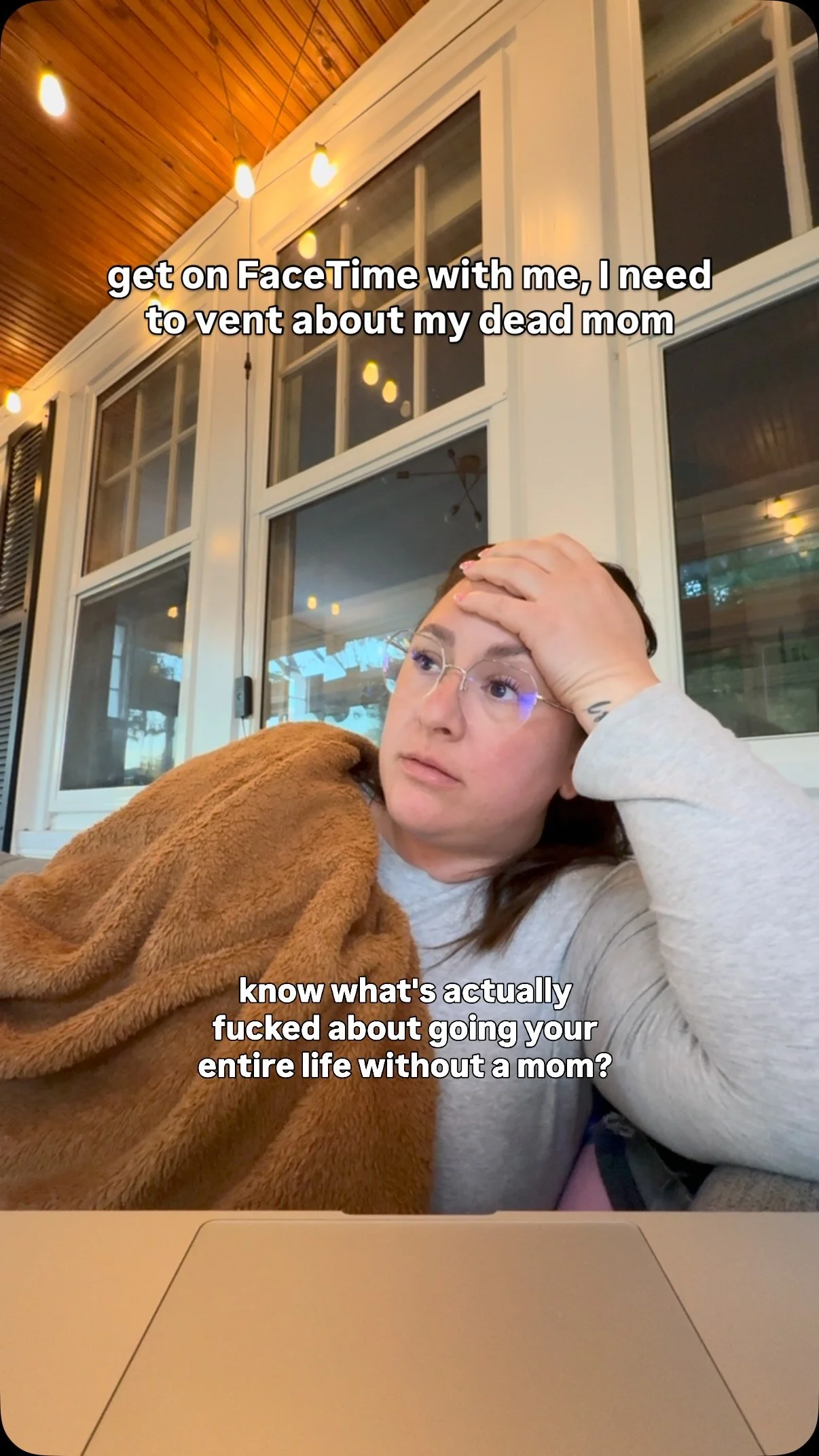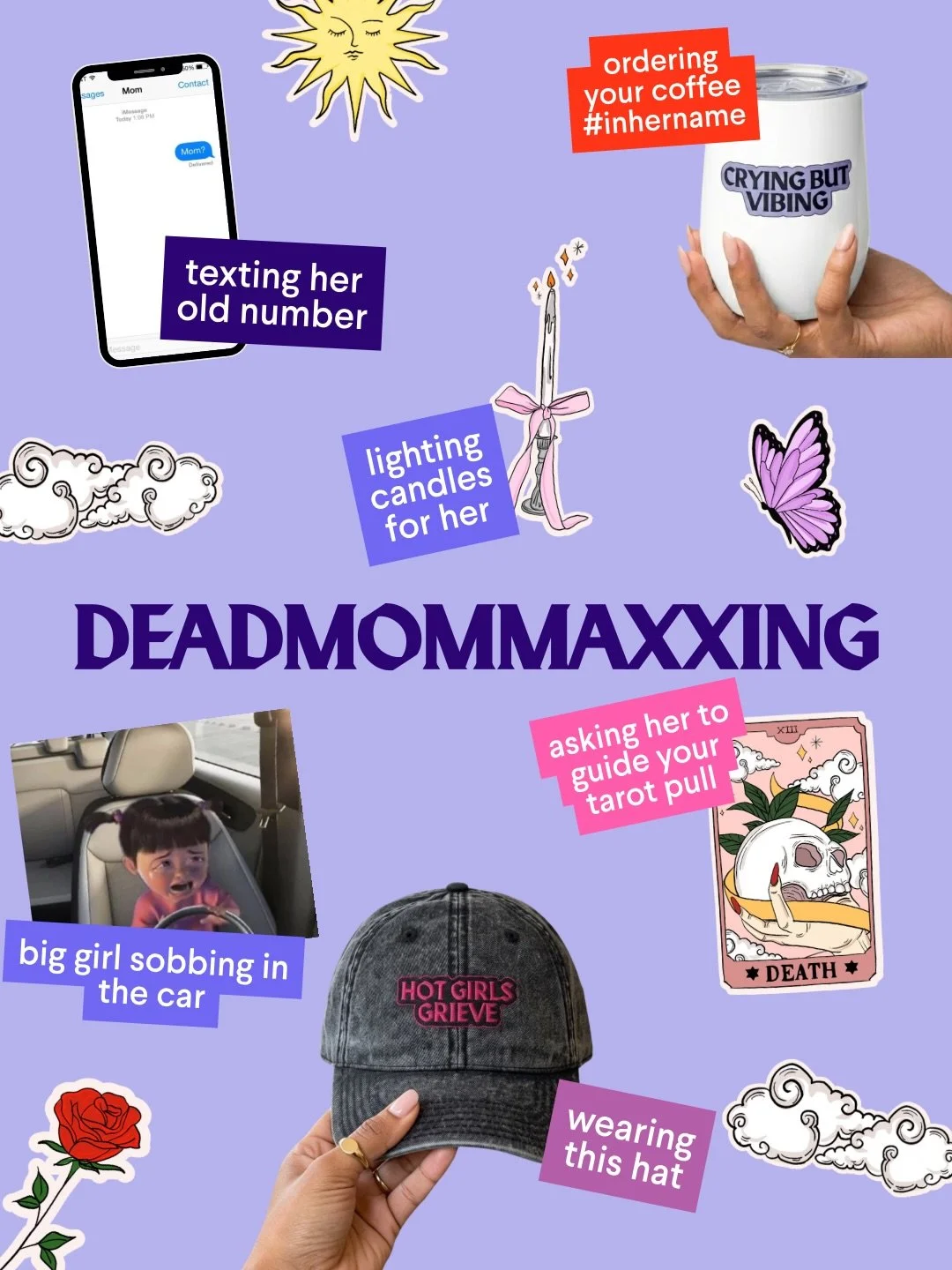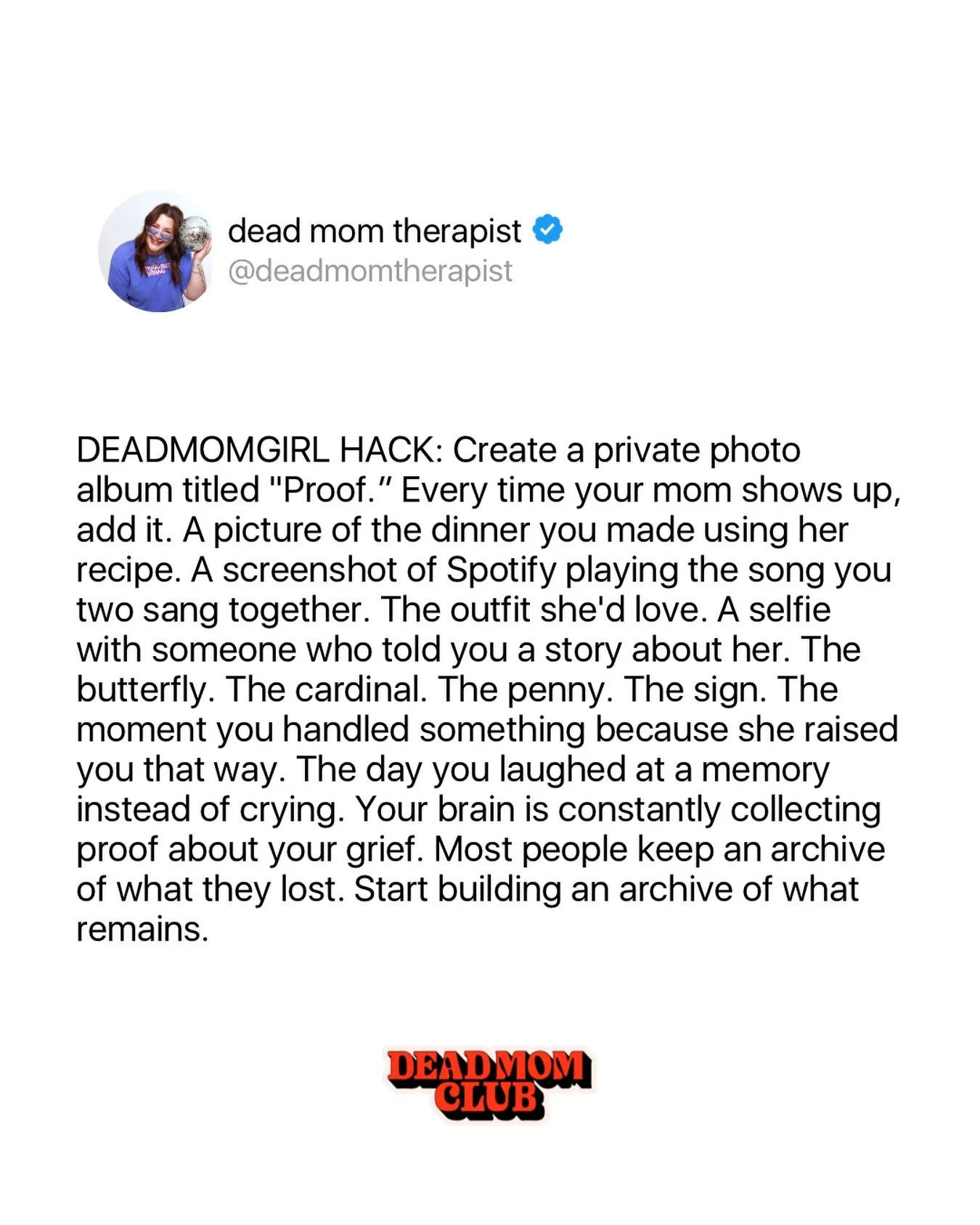
I have been a dead mom girlie since I was 5 months old.
The Dead Mom Club was born from a truth I lived long before I could name it.
My mom, Rosalie, died when I was five months old. I have never heard her voice, seen a moving image of her and I do not remember her face, but I grew up inside the shape of her absence. I learned early how to be independent, perceptive, and strong. What I didn’t learn was how it felt to be mothered.
Like many GrievHERS, I became high-functioning. I built a life. I pursued education. I became a therapist. I tried to understand grief from the inside out; cognitively, emotionally, clinically. And yet, something was missing.
What I noticed, both personally and professionally, was this: Most grief spaces weren’t built for women like me.
They were often focused on acute loss, closure, or “moving on.” They didn’t account for what happens when a mother dies early, when grief becomes part of your attachment system, your identity, your nervous system, and the way you relate to love and safety. They didn’t speak to the quiet loneliness of growing up unmothered, or the complexity of carrying grief into adulthood, relationships, and motherhood.
So I created what I couldn’t find.
The Dead Mom Club is a modern grief space for GrievHERS
…especially those who lost young, who are tired of minimizing their loss or explaining their pain. It’s where psychology meets spirituality, where ritual meets real life, and where grief is treated as something sacred and alive rather than something to fix.
My approach blends trauma-informed care, psychospiritual practices, ritual, community, and lived experience. I don’t believe in rushing grief or bypassing pain. I believe in integration, in learning how loss shaped you, and how to live fully with that truth instead of around it.
This work is deeply relational. Community is central. Healing doesn’t happen in isolation, it happens when we are witnessed, understood, and reflected back to ourselves. That’s why the Dead Mom Club isn’t just a resource hub, it’s a living, breathing community.
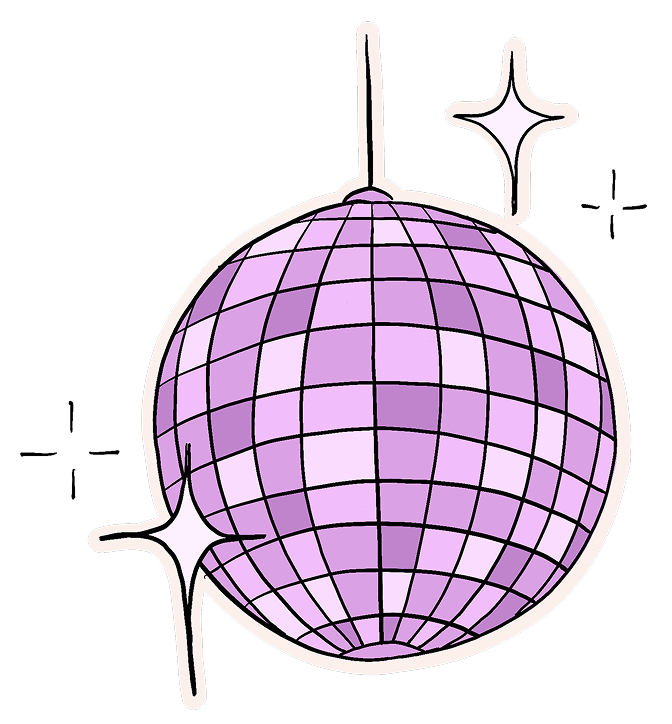
I often say this brand is a little death meets disco because grief breaks us, yes, but it also refracts us. Like a disco ball, made of shattered pieces that still catch the light, we learn how to glow in new directions.
The Dead Mom Club exists to remind you of this: Your mom died. You didn’t. And your story isn’t over.
This is a place to grieve honestly, love deeply, and become who you are, together.

Hi, I’m Miranda, The Dead mom Therapist
I’m Miranda Malone, clinical therapist turned grief guided, hypnotherapist, dead mom girlie and founder of the Dead Mom Club.
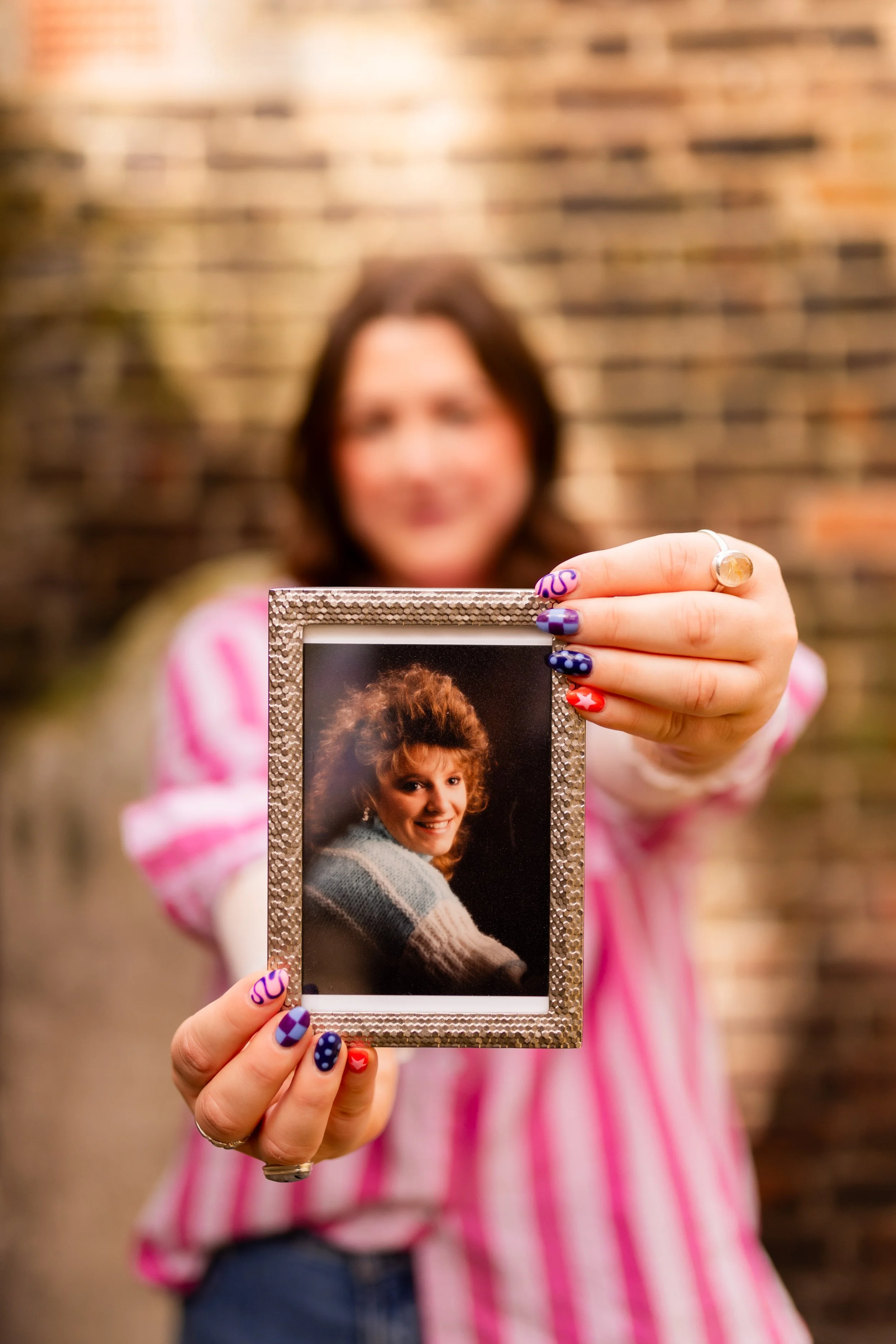
My mom, Rosalie, died when I was five months old. I don’t remember her but I grew up shaped by her absence. That kind of loss doesn’t end; it weaves itself into your attachment, your identity, and the way you move through the world.
I became a therapist searching for answers, for language, structure, and understanding around a grief that had lived in my body my entire life. What I found was that most grief spaces weren’t built for women like me: those who lost young, learned to be strong early, and carried grief quietly into adulthood.
So I created something different.
Today, my work blends psychology, spirituality, ritual, and community to support GrievHERS in integrating loss rather than trying to “get over” it. I believe grief is sacred, community is medicine, and healing happens when we are witnessed, not fixed.
The Dead Mom Club is the embodiment of that belief. A place where grief is honest, depth is welcome, and becoming is possible.
Your mom died, you didn't.
The Dead Mom Therapist Timeline
A journey shaped by loss, meaning, and becoming.

-
My mom, Rosalie Ann Malone, celebrated her 19th birthday on 3/21/1992, 8 days later, she gave birth to me, Miranda Ann Malone, on 3/29/1992. 165 days later, on 9/10/1992, she died in a car accident on her way to work. Little did I know, her death was the beginning of a lifelong imprint.
-
Grief became the background noise to my life. Like the static setting on a classic tube TV. Independence was my identity. Being “fine” became my survival skill. I never wanted anyone to think I couldn’t do anything because my mom died. I became the epitome of “I got it.”
-
I threw myself into relationships, self abandoning, always seeking for someone to love me in the ways she was supposed to. When not focusing on “being chosen” in relationships, I was learning the science behind therapy. I sought higher education. Achievements, diplomas, titles, external success. Again, if I did enough, no one would know I grew up without a mom. If I became enough, someone would choose me. But nothing let me name a grief that never really ends.
-
Motherhood cracked everything open. Becoming a mom didn’t just bring love, it brought my grief rushing through every cell of my body. The ache of needing my own mother while learning how to be one. The realization of everything I lost before I could remember it. The grief wasn’t new but it was louder, sharper, and more tender than ever. This was the moment my grief widened and my soul’s true purpose was ignited.
-
My grief was no longer just personal, it was generational. The question shifted from “How do I survive this?” to “How do I mother without having been mothered?” This is where my work deepened. And where the Dead Mom Club became a seed of an idea in my mind for legacy, repair, and becoming.
-
Traditional grief spaces aren’t built for early-loss daughters. They always felt too quiet. Too clinical. And frankly, I was always the youngest one in the room. So I began to consider what happens when psychology meets spirituality. Ritual meets real life. Grief meets community. I wondered what if there was a space where I was no longer “that dead mom girl” but a reflection of every other woman there. What would it feel like to join together in a space where everyone else in the room knew what going through life without her mom meant.
-
My seedling became the most beautiful blossom. The Dead Mom Club launched! - A space for GrievHERS to express honestly, connect deeply, and stop carrying it alone. Thousands of GrievHERS have connected through community, circles, events, rituals, and shared language. Here they understand that grief does not end, and it certainly does not need to be beige.
A little bit death. A little bit disco.
-
I am just getting started. This story is still unfolding, just like my grief. And if you’re here, you are a part of the story.
Our Values: DISCO

Grief doesn’t end, it transforms, reflects. We meet it with depth, honesty, and a little bit of sparkle. Think: death meets disco.
I’ve had a disco ball hanging in my home since 2017. I have always loved their dazzling presence and have enjoyed something called “disco ball hour” every day which is my little hit of daily dopamine. I have also been drawn to the disco ball because it mirrors my grief so perfectly. It’s made of shattered glass, and yet when the pieces are gathered back together, it reflects light in every direction it turns.
This is what dead mom grief does to us.
We were shattered when our mothers died and still, somehow, here in this space, we learn how to glow again. Death meets disco because loss doesn’t end the story; it refracts it. From brokenness comes reflection, connection, and unexpected joy. The disco ball reminds us that even in grief, we are not dimmed, we become light in new directions.
-
![Cartoon image of a cell phone surrounded by flames, resembling a burning fire.]()
Duality
We hold light and dark at the same time. Grief and joy. Rage and reverence. Heaven and nightclub. You don’t have to choose one version of yourself here, all of you belongs.
-
![A cartoon sun with a face and closed eyes, depicted with a calm expression. The sun has yellow rays extending outward, outlined in black, against a transparent background.]()
Integrity
This work is rooted in real care, trauma-informed practice, and lived experience. No bypassing. No toxic positivity. No healing because grief is not a disease. No pretending grief should look a certain way. What we offer is honest, ethical, and deeply intentional.
-
![A lit white candle with melting wax, decorated with a pink ribbon bow, standing on a metallic candle holder.]()
Sacredness
Grief is holy. A beautiful, soulful journey. Love doesn’t die. When your mom died, the relationship didn’t and neither did you. Loss deserves ritual, reverence, and space to be honored. We treat grief as something meaningful, not something to rush through. We create a sacred relationship with it as it will be there for life.
-
![A cartoon drawing of a cherubic child with curly hair, wings, and a pink heart in their arms, resting their head on their hand with eyes closed in a peaceful pose.]()
Community
Arguably the pillar value of The Dead Mom Club. Healing can never happen in isolation. Here, our grief is held, together; in shared language, laughter, tears, and recognition. We know what it is like to be in spaces where you are “that dead mom girl.” Here, your dead mom is normal and we want to hear about her. No explanation. No softening. Just witnessing and validation.
-
![A drawing of a crescent moon with a face, pink cheeks, and closed eyes, surrounded by stars and sparkles.]()
Ownership
Your grief is yours, and so is your becoming. We support you in reclaiming your story, your identity, and your life after loss. Every belief system, culture, identity and ideology is welcome in this space because it is all correct. And we want you to own that in a way that allows you to weave your dead mom grief into the rest of your life. You are not broken. You are shaped, and still becoming.
Get social with us